
TRI’s role in empowering communities and the challenge of heterogeneity
- Claudia Cáceres

- Sep 8, 2019
- 2 min read
TRI works to bring equal opportunities to India’s most impoverished communities. They believe that change can be sustained when communities take ownership, responsibility, and initiative. In addition, their focus on change is multi-pronged and multi-dimensional. These two specific features set them apart from other NGOs which usually focus on particular outcomes related to specific life dimensions (such as education, health, among others) through an assistance program.
To reach these goals, TRI partners with different NGOs that are present in the districts TRI has defined as a priority. TRI ensures that these NGOs’ work is focused on empowering communities through working with Women Self Help Groups (SHG), and is improving the outcomes that TRI has identified as a priority. TRI coordinated with all these NGOs which ended up being the implementation agents. However, as any multi-stakeholder intervention, some unexpected challenges arise and TRI’s role in solving them is key for them to scale-up their impact.
Despite the fact that all the NGOs are working towards the same end goals, their approach in practice is varied. Varied approaches to solving the same problem are reasonable given that the context they are working with is not the same and each village has its own set of priorities and ways of operating. This adds difficulty to the monitoring process and adds complexity to the process of identifying what works and what does not when trying to develop action plans. Moreover, communication with investors is more complicated with interventions of this nature.
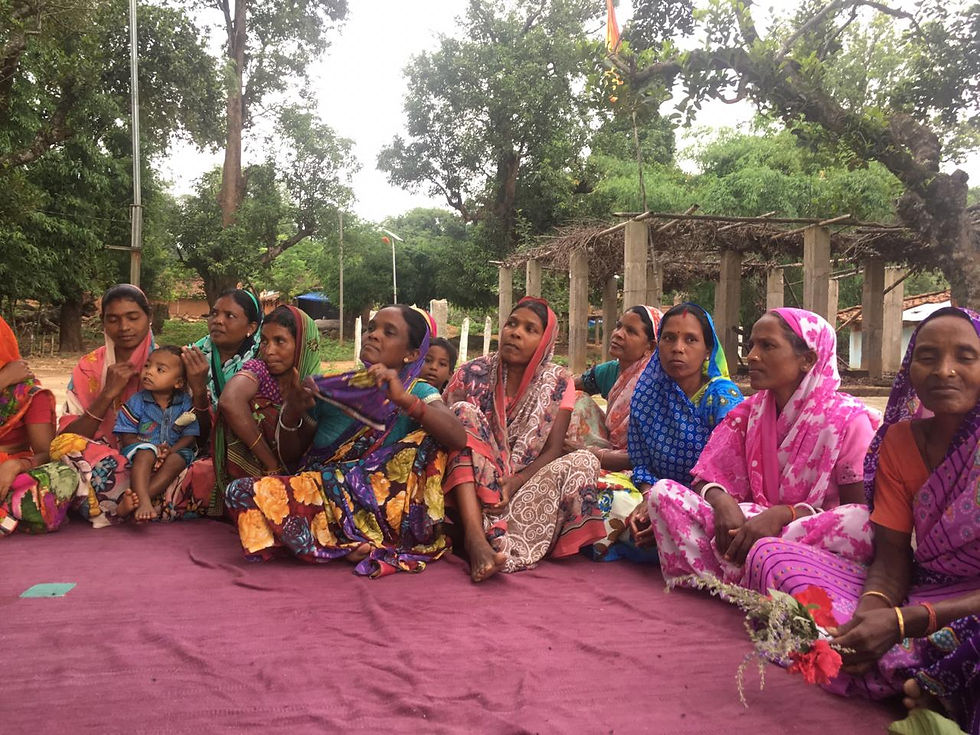
During our 8 weeks collaborating with TRI, we had the opportunity to visit villages in Raidi and met with Women Self-Help Groups (SHG) that are receiving support from these partner NGOs. We met with two self-help groups located in the same districts and we were able to witness first-hand the variety of projects taking place in the villages. In one village, SHG developed a water and sanitation program, funded by a private company. In the other village, the SHG partnered with “Solar Mamas” to bring solar electricity to their households. The NGOs that were supporting these SHGs used different mechanisms to help the SHG bring better services to the villages. These are two examples of the 100 plus projects that are currently operational in TRI targeted districts. If TRI keeps growing, this heterogeneity will only keep expanding.
The TRI leadership team is persistently developing innovative ways to better face this challenge. They are aware that there is always a gap between what is planned and how this is implemented. They know that adaptation is key and they are willing to improve their process whenever new information is available, they are a learning organization.
During our internship, we collaborated with them on disaggregating their theory of change into specific activities. This exercise allowed them to identify common routines throughout all the partner NGOs and start measuring these routines to have a better idea of their current value. Once TRI has the available impact evaluation data, this information should be used to illustrate the impact. This type of information should press the TRI team to have a more systematic way of trying stuff out: to push particular parts of the system; to prototype interventions, and then undertake quick assessments, to be followed by more systematic impact assessments where there is a real promise.


Comments