
Field visit
- Claudia Cáceres

- Sep 8, 2019
- 2 min read
In the fifth week of the internship, we were able to go to the state of Jharkhand in order tod help us better understand how things were actually happening in the ground. It was a week full of insights, learning, and emotions. Getting to know self-help group members, villagers and government officials that are dealing daily with different obstacles to be able to improve the districts’ well-being really impressed and motivated me. Reflecting on these topics, some of the things that I take with me from the trip are:
Field teams and TRI thematic partners are an honest representation of TRI spirit: The way they are fully aware of the district’s reality and how they use all this knowledge to improve the design and implementation of their interventions is key for TRI success. The way they are co-existing in their ecosystem and are able to engage and collaborate with the different counterparts in the ground (government and non-government agencies) makes their work more efficient and relevant. In that sense, we spent several hours with them, trying to understand how all that we learned in Delhi with the leadership team was actually translating to the ground. The idea was to understand if there is sufficient data to connect how the inputs that TRI is giving (such as technical workshop to change vectors, working with government services) is actually improving the empowerment/agency of the women and how that translates on better outcomes for the population that lives in their village. With all the knowledge we gather from them, we will make a presentation of our findings in Delhi.
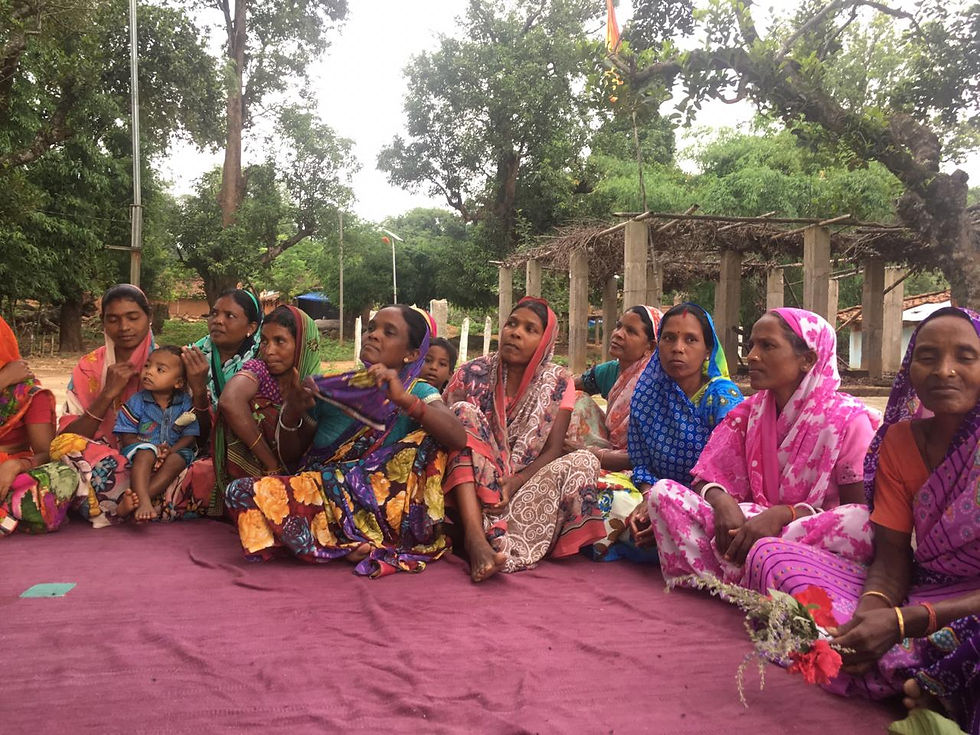
Self-help groups do make a difference: we visited two self-help groups living in nearby villages. Even though they are meant to have a similar role in their own village it was great to see how they adapt to their own needs and how the women organizing can really bring change to their community. The first SHG we visited organized themselves to help in the implementation of a water project financed by private funds. Also, they were in the process of understanding how to help other women of their community on health and education issues. The second SHG we visited was collaborating with the district government to start a project on solar energy. Because of how well they were performing, the district chose this SHG as the pilot. If the solar energy project works well in that community, they will scale it up to the other villages. Overall, it was great to talk with them and ask them about their impressions of what the SHG meant for them. They all agreed that it was a safe place, were they could together bring change and speak up.
How to bring innovation to regional government: as part of our internship, we were documenting the aspirational fellowship program. In that sense, we met with 4 fellows in two different districts. They are collaborating with the district officials to improve the way services are delivered. These fellows are highly trained professionals that are bringing innovation to the districts by improving the process (support on management) and by designing new programs (support on the design and implementation of policies).

I will try to make a post on each one of these topics to further explain everything I learn in the field!


Comments