
Women, Change and TRI
- Claudia Cáceres

- Jul 5, 2019
- 3 min read
Updated: Jul 8, 2019
Over the last two weeks, I have been immersed in tons of documents and meetings, trying to understand the core activities of TRI but also getting to know the people here, beginning to understand their day by day operations.
TRI works to bring equal opportunities to India’s most impoverished. They genuinely believe that when communities take ownership, responsibility, and initiative, change can be sustained. Also, they have a focus on change as multi-pronged and multi-dimensional. These two specific features are the ones that set them apart from most other NGOs which are usually focusing in particular outcomes related to specific life dimensions (such as education, health, among others) through an assistance program.
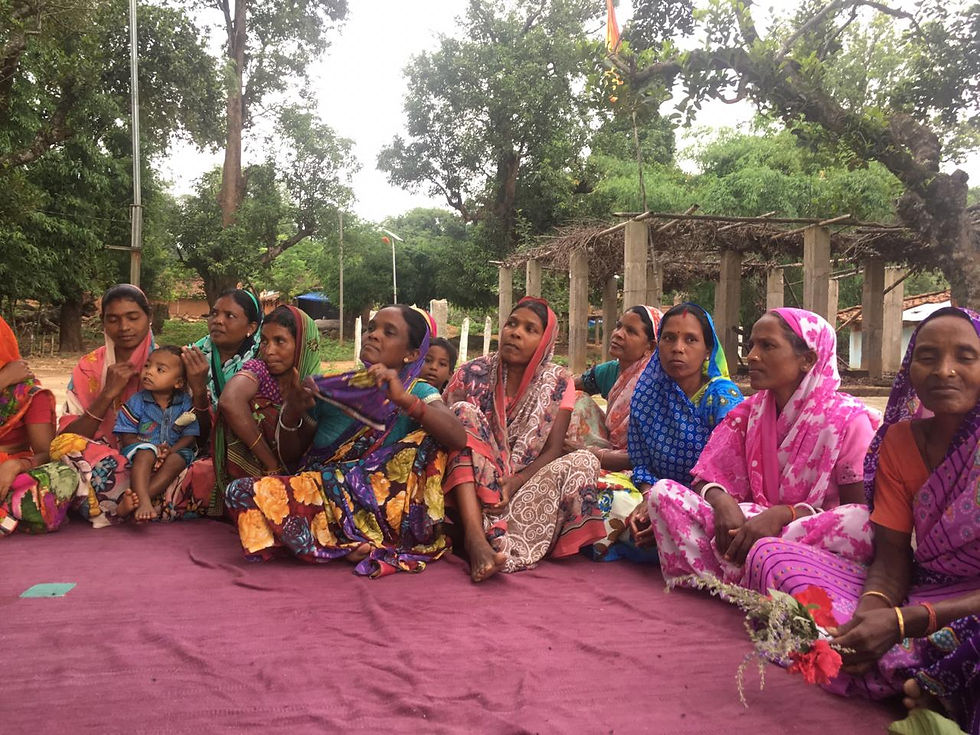
Women Self-help Groups (SHG) act as a source of collective action and provide the women the support to change their life aspirations and take responsibility for themselves. TRI works with them as the actor that is going to bring this long-lasting change. They conduct several pieces of training and workshops that combine technical knowledge (education, health, WASH, etc.) and focus on developing agency and leadership. Along with more actors (private sectors, thematic NGOs, and local government), TRI represents the platform that aligns all of them to bring development to poor rural communities, but ultimately their efforts are directed towards making the communities agents of change.
Frameworks like the one from TRI (multi-dimensional and multi-stakeholders) represent an asset to bring long-lasting change to communities. Through the past years, they have been super efficient in: i) increasing community leadership to drive and take responsibility for change (new SHG initiative to change health, education, farm prosperity, and labor), and ii) expanding government partnerships.
However, through some meetings with Anish and Anirban, it was pretty clear to me how having long term outcomes and coordinating with multiple stakeholders could be a challenge. Even though they are convinced that these features of TRI are essential to bringing long-lasting change, they are also aware of its complexities and challenges.
We are here to help them deal with some of these challenges by analyzing why they are appearing and what tools could be developed to better confront them.
The first challenge we will work on is how to better communicate their strategy to key stakeholders and investors. They are a young organization that needs to validate their process and somehow provide proof that their strategy is worth it. However, because real changes are going to happen through community empowerment, it takes some time for these changes to materialize into final outcomes and they have to go ahead despite the lack of belief of some counterparts. However, they are confident that developing a framework to measure the theory of change and translate it into a sort of cost-analysis evaluation would help them, so we have started designing it.
The second challenge we will work on is how to diagnose and strengthen their links with the government. As I mentioned, TRI is a platform that interacts with different actors being the local government a key stakeholder in bringing development to rural communities. Their work with the government mainly consists of helping the community be able to communicate their necessities to the local government for the government to adapt their services to rural contexts. However, in the past year, TRI has signed an agreement with the government and is helping in the implementation of a public program: the aspirational fellowship program. This program consists of hiring fellows to work on the field and support the local government implementing vital public services. TRI developed a specific framework to structure this interaction that has received positive feedback. However, they have not yet documented it or gone into the details of why this framework is working and how it could be improved. Through several field trips and interactions with the fellows as well as interviews with government officials, we will translate this framework into a model to overcome public service delivery challenges.
Next week I will be leaving Delhi to do field work, enough of reading and books, it is time to witness first-hand their work and the people they are helping.


Comments